About Me
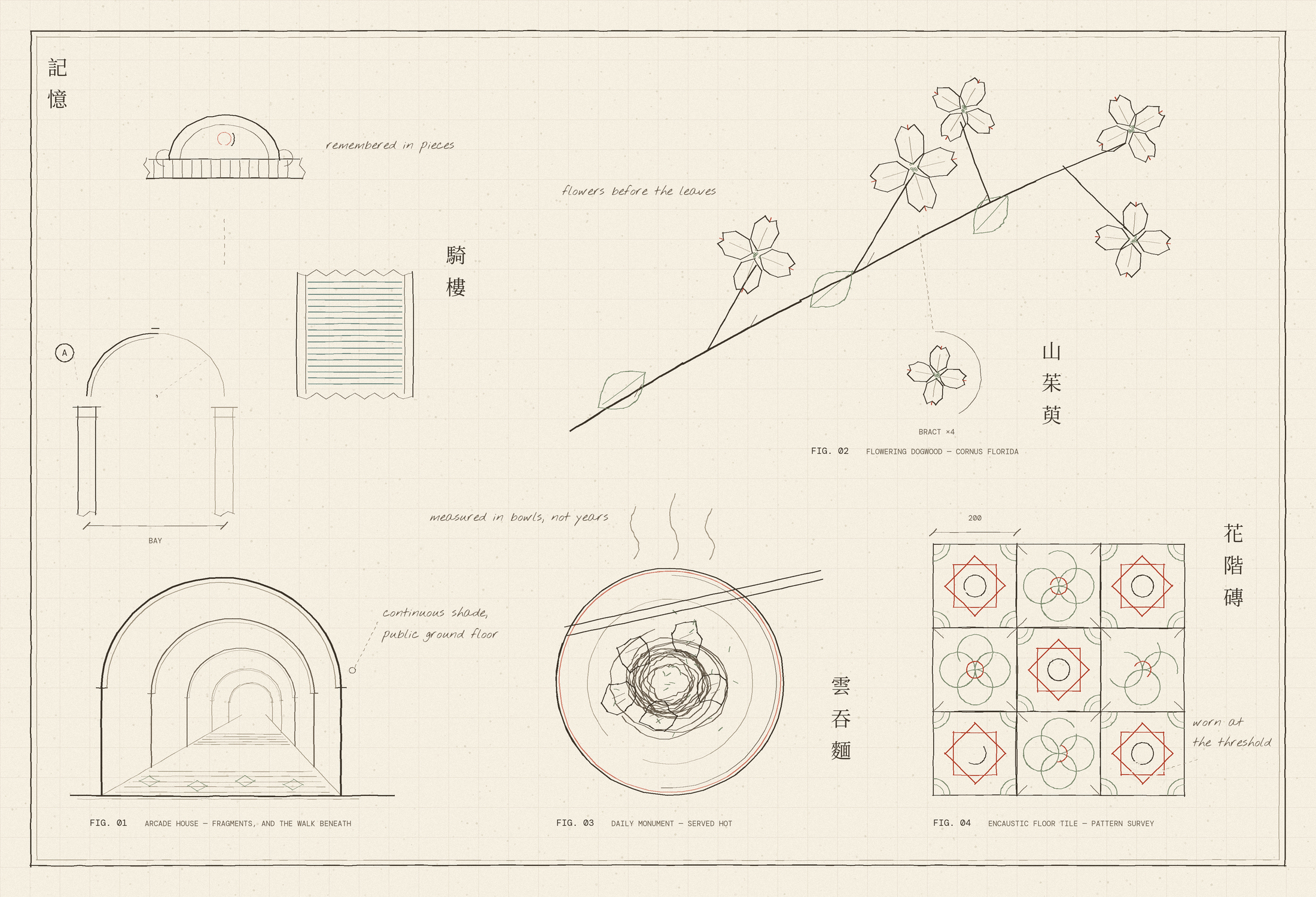
I grew up in Guangzhou, in a city best explained by its ordinary things — the arcade houses that carry pedestrians through the rainy season, the patterned floor tiles worn smooth at the threshold, a bowl of wonton noodles served the same way for decades. None of it was called heritage; it was simply how life worked. I have been trying to take the measure of that kind of ordinary ever since.
I trained first as a landscape architect, at Purdue University and then in practice in Guangzhou, where I worked on the adaptive reuse of a historic textile plant. The evening a band I loved played the live house inside the complex we had designed, I understood that preservation is less about freezing a place than about returning it to life. At Cornell University I turned to historic preservation planning — tracing New York State's vanished kitchen gardens for my thesis, writing a cultural landscape report for a museum in Auburn, leading a twelve-person community design team in a lakeside village, and mapping the houses of the Underground Railroad in Ithaca.
These days my work centers on Indiana. I research and write about the state's overlooked past: the first drive-in banks built for a city learning to live with the automobile, a ballpark that outlived its team, a school. I also build digital tools that put preservation within reach, mapping Green Book sites, walking users through Section 106 review, helping find the consulting parties who belong at the table.
My research now is the Chinese restaurant landscape of Indiana: where the food, the labor, and the capital came from. It began with the Bamboo Inn, which spent twenty-seven years on Monument Circle and appears in the theater's National Register nomination as a single word, altered. It is the same ordinary I grew up among, and the same problem. No one thought it was worth writing down.