Bamboo Inn 竹 園
A Look Back at a Chinese Restaurant’s Flourishing Period in Indianapolis
Centering around the Indiana Soldiers and Sailors Monument, Indianapolis’ Monument Circle is one of the most well-known historic places in Indiana’s capital city. A small but intricately designed Neo-Classical Revival style building with an eye-catching white glazed terra cotta facade is located on the southeast side of the Circle, known as the Circle Theater.
The Circle Theater was one of the first “deluxe movie palaces” built in the Midwest, opened in 1916. The decoration of the lobby promenade, mezzanine, and house with processions of Greek figures, intricate moldings and details create a luxurious atmosphere for visitors. It was also the first building constructed in Indianapolis expressly for the presentation of feature-length motion pictures. $500,000 (nearly $15 million today) was invested in the development of the Circle Theater.
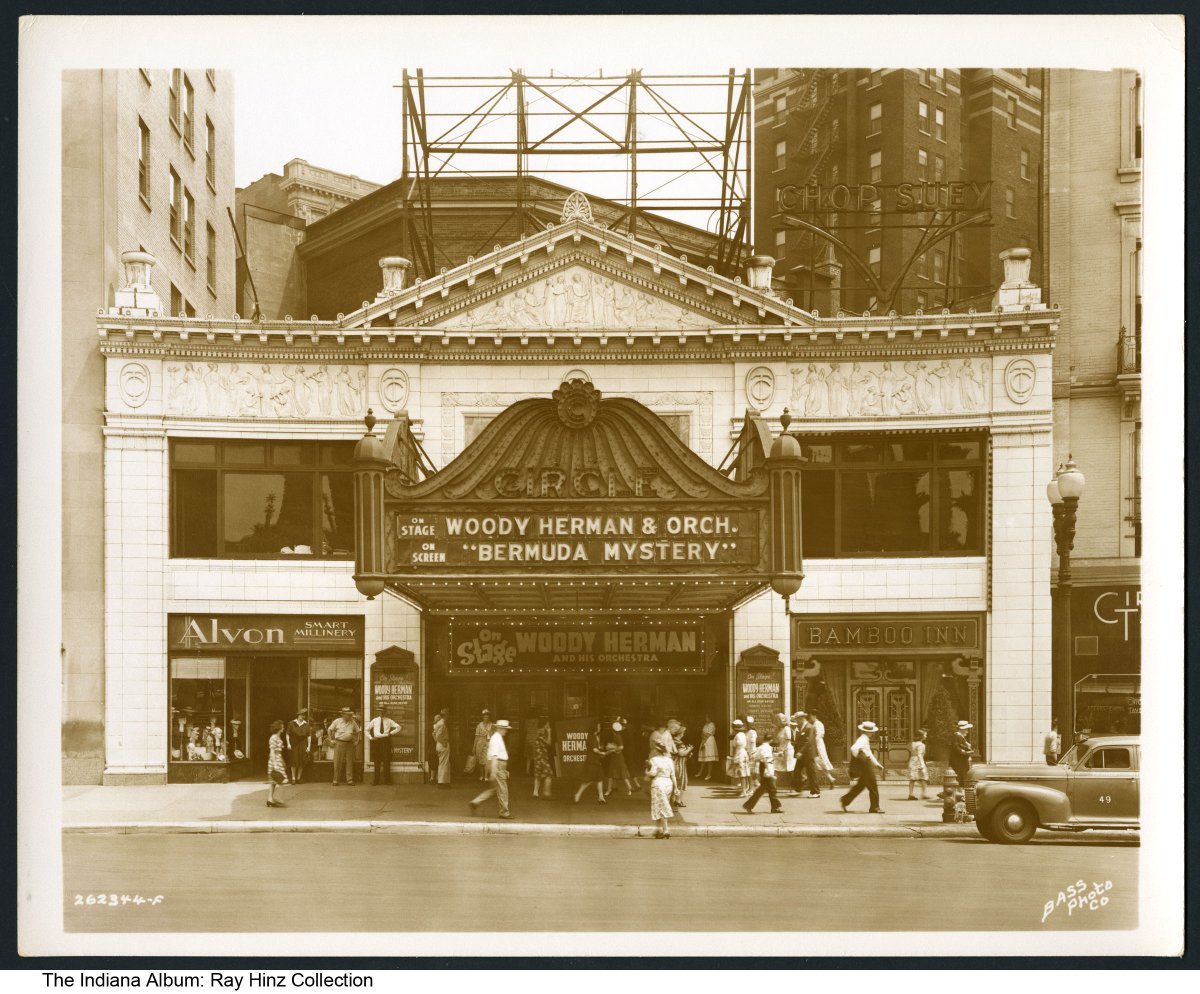
For many early twentieth-century moviegoers, a deluxe movie experience was only the first part of the evening. The perfect follow-up was dining in the Bamboo Inn, a restaurant adjacent to the theater’s entrance, for the trendy Chinese food.
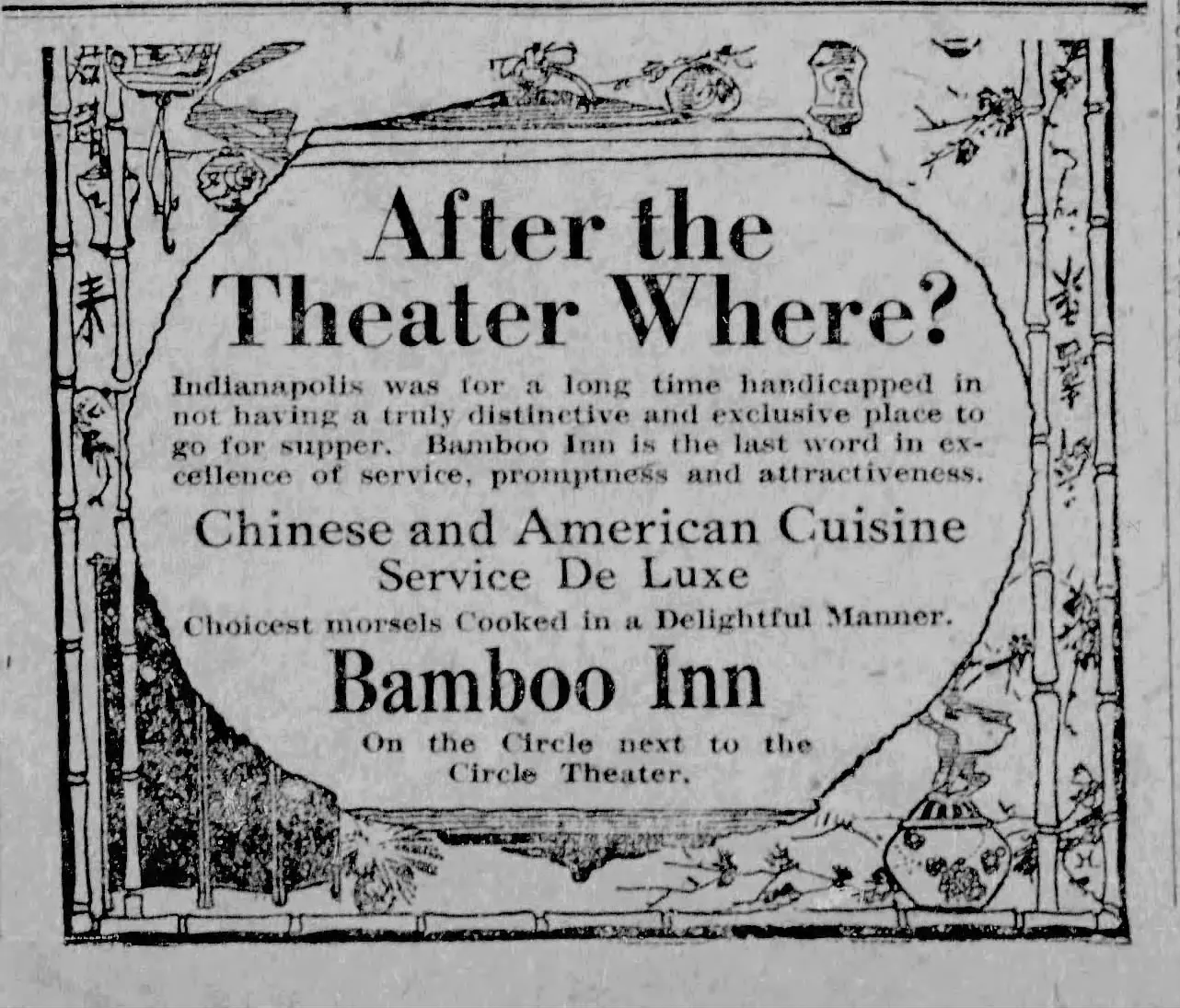
“After the Theater Where?” (Newspaper clipping from the Indianapolis Star (Indianapolis, IN), September 5, 1919)
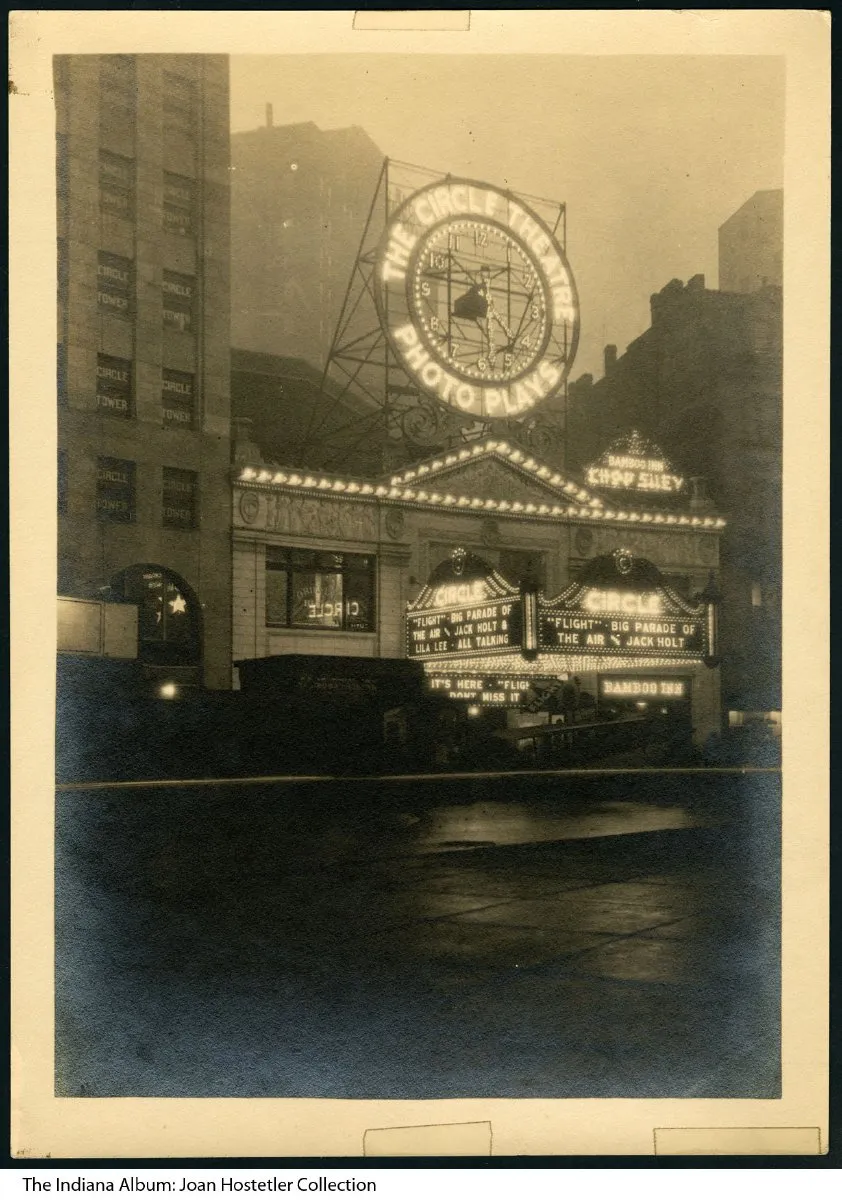
Circle Theater, c. 1925 (Photo from The Indiana Album, Joan Hostetler Collection)
A lightbulb sign that spelled out “BAMBOO INN CHOP SUEY” was situated on the top of right storefront, accompanied with Bas-Relief panels of Greek figures in Rookwood pottery, which ornamented the frieze below the cornice and the tympanum enclosed by the pediment. Today, visitors would not find evidence of the former Bamboo Inn at the Circle Theater, but research into its operation reveals a fascinating piece of hidden Indianapolis history.
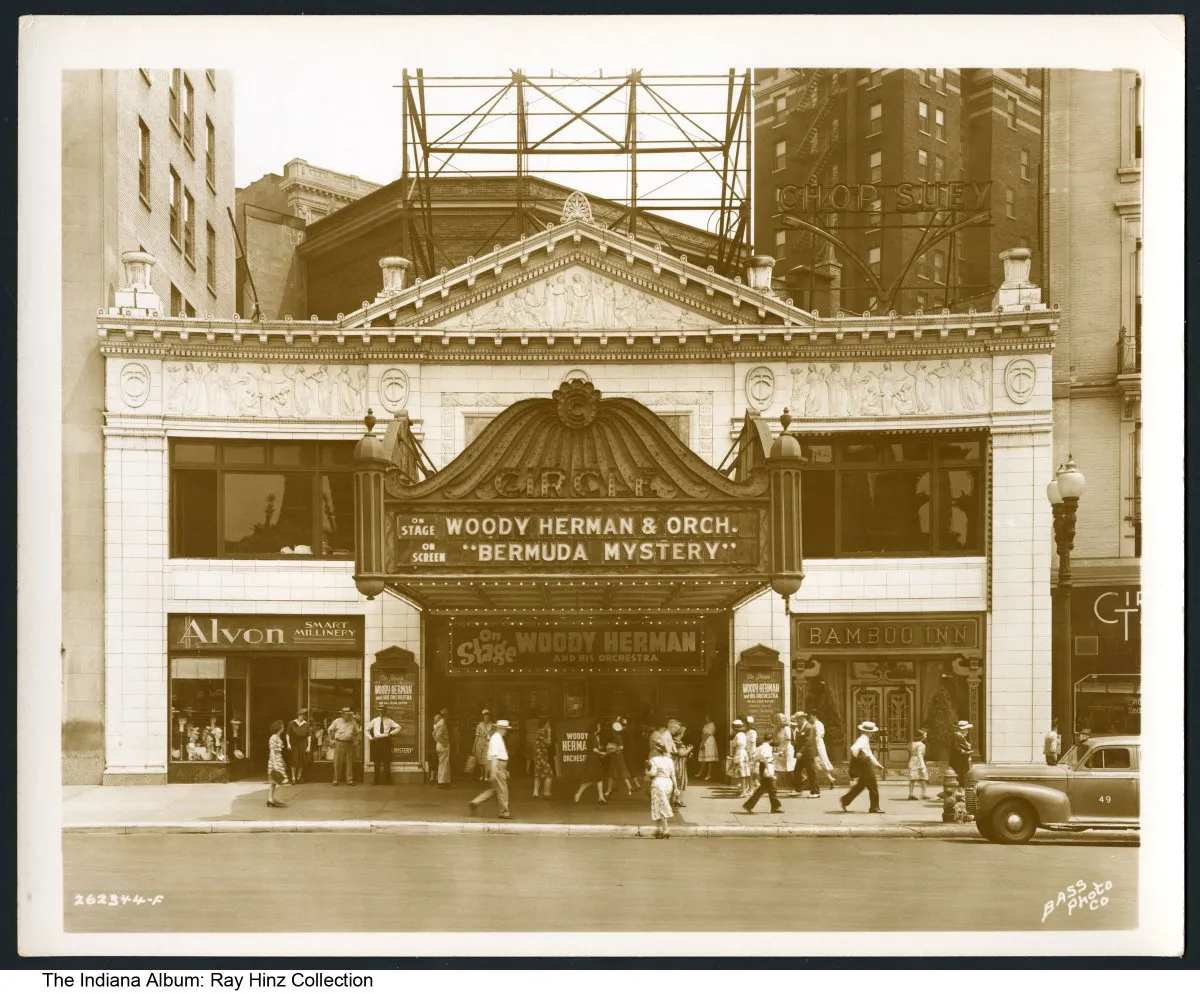
Circle Theater, 1944 (Photo from The Indiana Album, Ray Hinz Collection)
For many Hoosiers visiting the city, dining at the Bamboo Inn was a must-do. When legendary basketball coach John Wooden recalled the greatest day of his life, he mentioned dining at the Bamboo Inn following his wedding to his wife, Nellie. George Gipp, a famed college football player at the University of Notre Dame had a great date night at the Bamboo Inn. Richard P. Letsinger mentioned in his memoir that he and his friend obtained a pass from Fort Harrison so they could go out for dinner with his family at the Bamboo Inn. In an interview with Gerald Weales, professor emeritus of English at the University of Pennsylvania and a longtime theater critic, he shared his memory of his fourteenth birthday – going to Indianapolis by Greyhound and having lunch at the Bamboo Inn. Many social clubs held meetings at the Bamboo Inn as well. Bamboo Inn held a special place in many Hoosiers’ greatest days, birthdays, anniversaries, and special moments.
Bamboo Inn was opened on July 13, 1918, a day of abundance, auspicious for opening of a business in the Chinese calendar, which was essential for the business’ success. While the Bamboo Inn was not the first Chinese restaurant in Indianapolis, it was the first situated in the heart of the city, turning Chinese dining into a popular trend among Hoosiers. It was advertised as the most exquisitely decorated restaurant in Indianapolis. The restaurant brought the spirit of that far-away eastern land to the Midwest with quaint carvings, strange designs made of interwoven bamboo, and beautiful multi-colored Chinese lights.
The first proprietors of the restaurant were the Gong Brothers with manager George G. Gong. Soon in May 1919, he established another Chinese Restaurant in Memphis, Tennessee called “The China Inn.” However, the management under the Gong Brothers didn’t last long, as George Gong was learning to be an aviator in 1920 and planned to establish a flying school in Pekin.
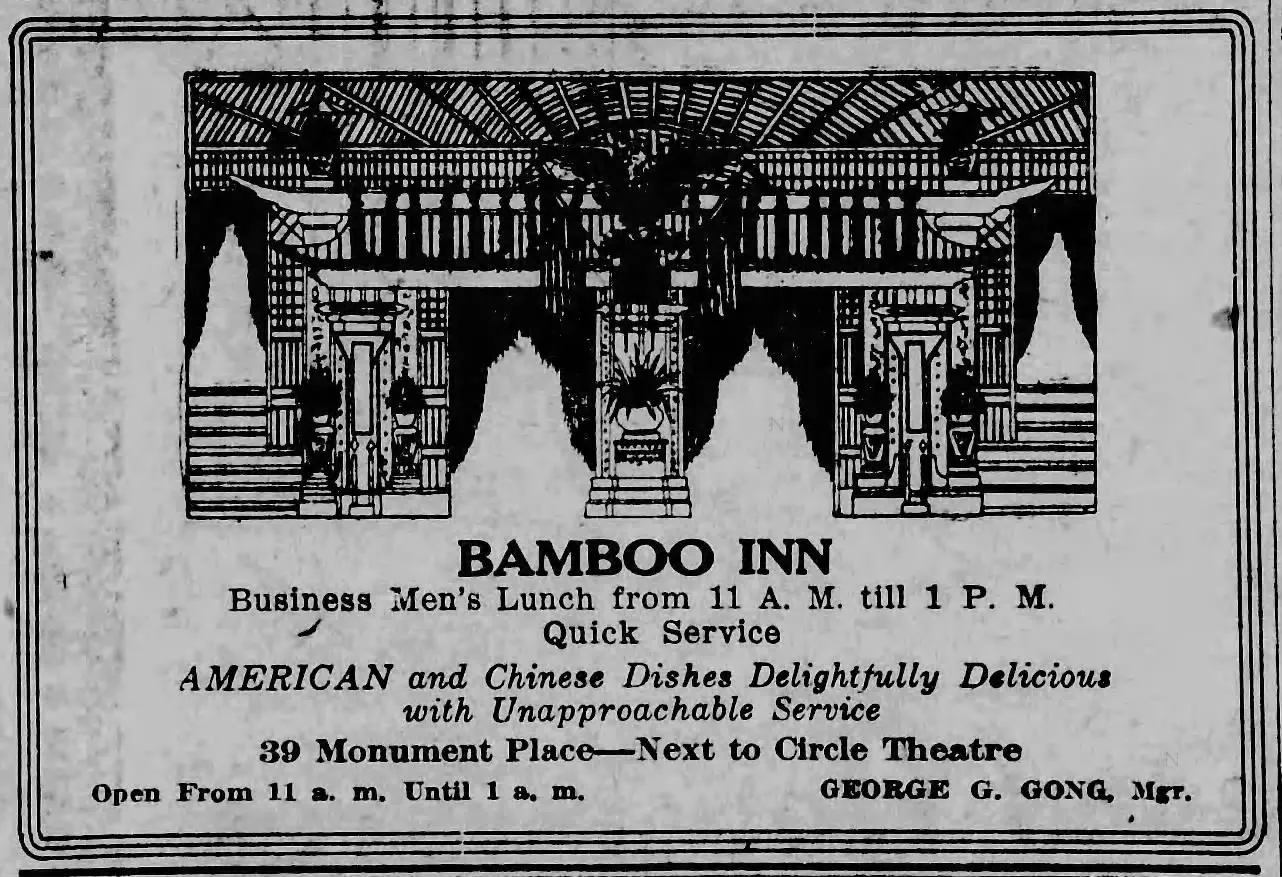
“Bamboo Inn” (Newspaper clipping from the Indianapolis Star, August 11, 1918)
Bamboo Inn was transferred to a new management composed of members of a syndicate from the Tuen Hip Wey Association of Chicago. The new manager was Mark Sing, head of the Yee Lung Tank Exporting and Importing Company of Chicago, and he took an active part in the Liberty Loan campaigns among the Chinese in America. Besides the change of management, Bamboo Inn was remodeled entirely with cherry and marble finishings, heavily carpeted floors, and conservative wall decorations. Additionally, it featured private dining booths, which were totally new to Indianapolis. (image - private dining booths) New chief Henry Shinohara, who worked in the nationally famous King Joy Lo Restaurant in Chicago, brought in unordinary cuisines¬—a combination of the best in American, Chinese, and French cooking.
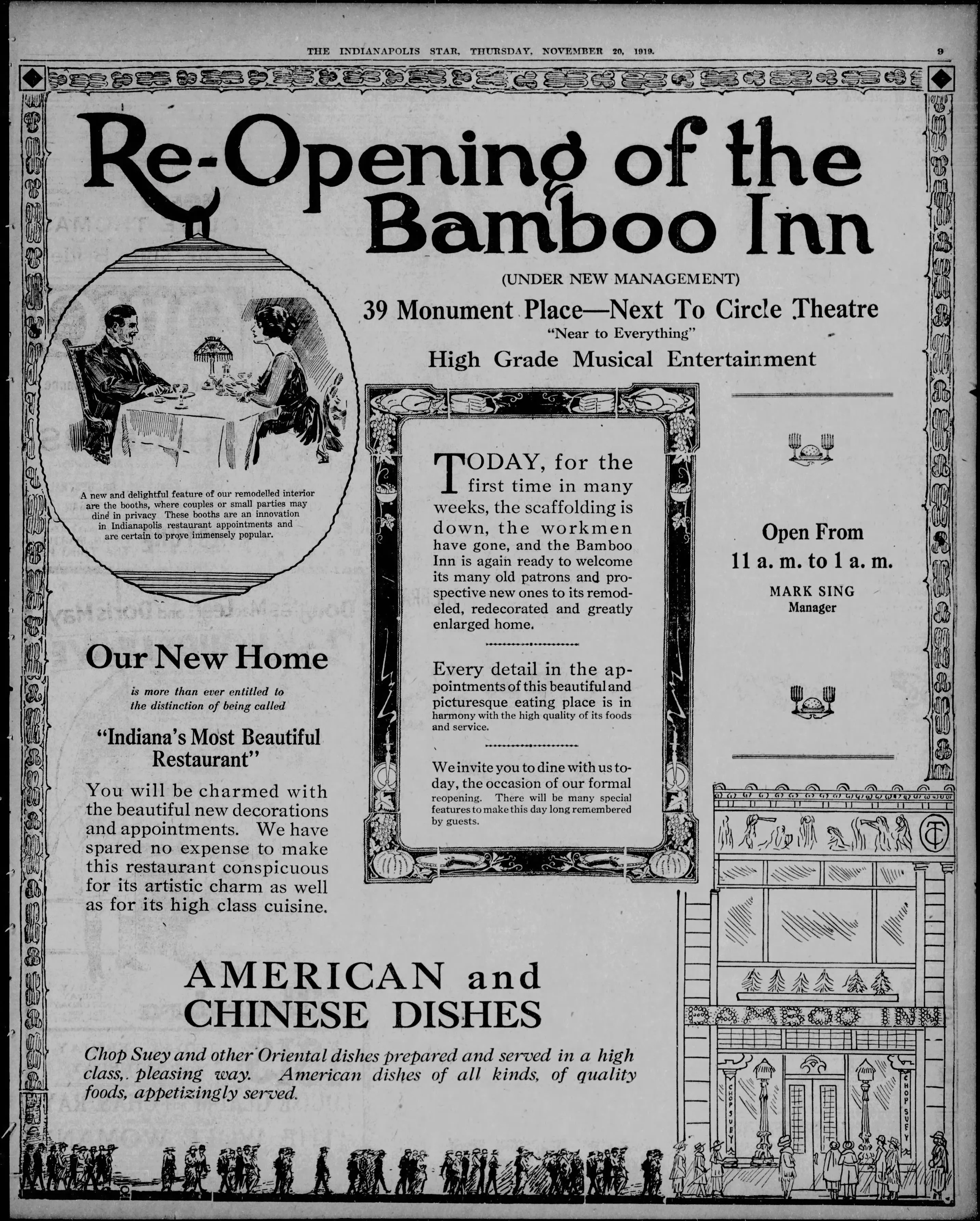
“Re-Opening of the Bamboo Inn” (Newspaper clipping from the Indianapolis Star, November 11, 1919)
The majority of the restaurant’s owners and employees were from Canton, China, especially from the Sunwui and Toishan regions. Often from the same clan, they left their hometowns in pursuit of a better life in the United States.
In a February 2025 interview, Indianapolis resident Peter Cheung, former owner of the House of Cheung, shared the story of his grandfather, a founding member and chef at the Bamboo Inn. His grandfather arrived in San Francisco around 1910 alongside men from his clan. As California’s mining opportunities declined, the group traveled eastward in search of work, spending time at Chinese restaurants in Minneapolis, Cleveland, and Detroit. Peter believes the rapid development of Indianapolis ultimately motivated his grandfather and uncles to settle and seek new opportunities there.
Later in 1932, Bamboo Inn underwent another major upgrade. The upper floor of the restaurant was opened to public with spacious dining room for about 250 – ideal for private parties, banquets, bridge-luncheons and similar entertainment. The second floor was called Club Orientale, Hal Bailey and his “band of a thousand melodies” provided the music for the dancing in the club.
The staff’s dedication extended beyond the restaurant walls. In 1944, twenty Chinese employees of the restaurant topped their $100-bond-a-person goal in the Fourth War Loan drive with more than $2,000 in war bonds to support the WWII.
Sadly, in 1945, Bamboo Inn’s lease in the Circle Theater ended and needed to find a new site. They didn’t go far or leave the Monument Circle. The restaurant relocated to the northwest quadrant of the Circle, finding a new home inside the English Hotel.
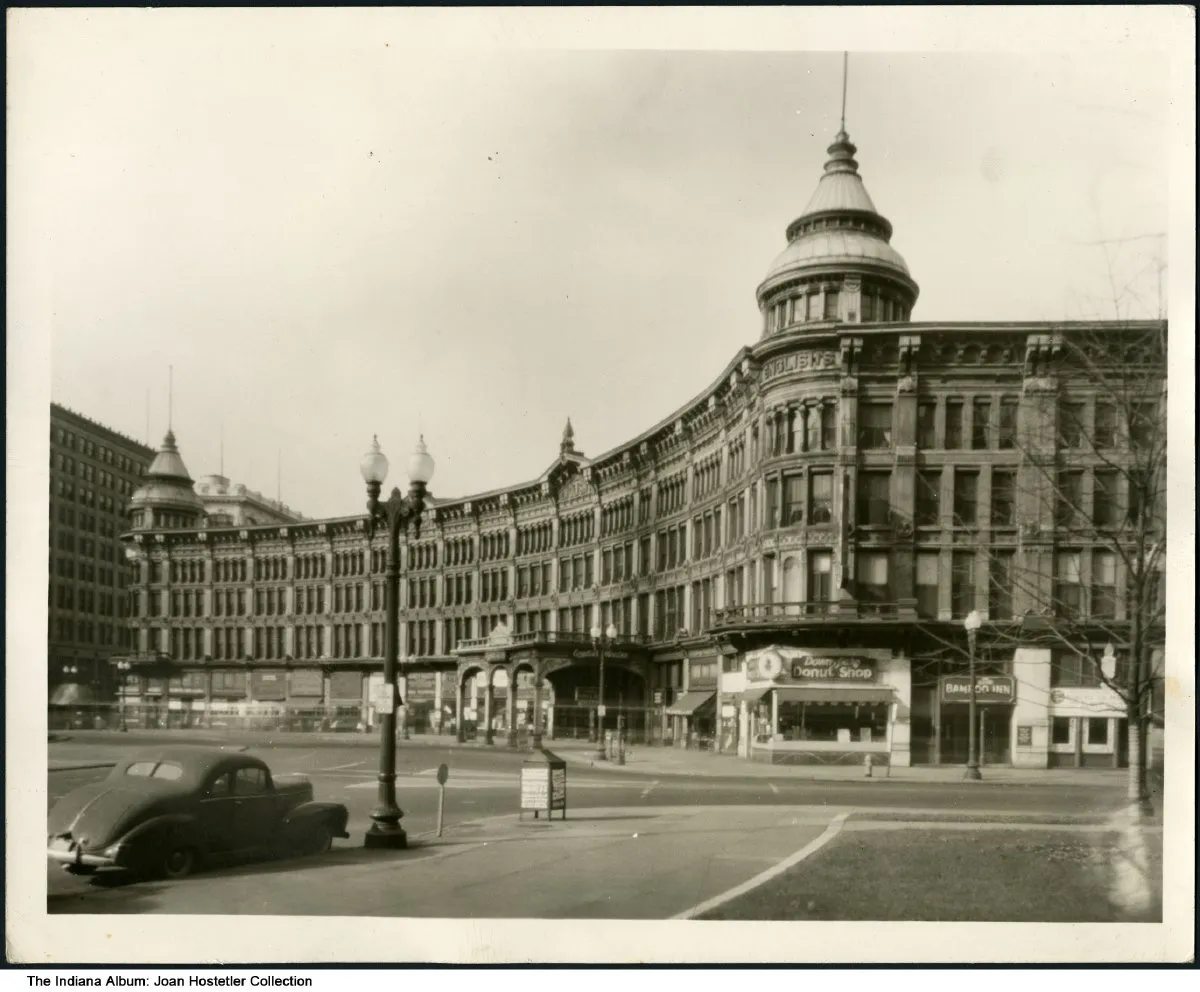
English Hotel and Monument Circle, c. 1940 (Photo from The Indiana Album, Joan Hostetler Collection)
Constructed in stages between 1884 and 1896, the English Hotel and its adjoining opera house were architectural marvels. Modeled after the New York Grand Opera House, the Bedford stone structure boasted marble pillars, grand staircases, frescoed ceilings, and a lavish 2,500-seat auditorium. It stood as a premier downtown destination, and the Bamboo Inn’s new space in the Meridian Street-facing section allowed it to remain a luxurious, high-profile dining spot for Hoosiers celebrating significant life events.
By 1948, shifting architectural fashions and the deteriorating condition of the English Hotel led to a decision to demolish the grand building to make way for a modern J.C. Penney. In the same year, part-owners Joseph Chung and Poy Hee Chinn dissolved their partnership and sold the Bamboo Inn to Genn Ginn and Henry Gin. After thirty years, the restaurant bid farewell to Monument Circle.
Bamboo Inn found a new home at N. Meridian Street and reopened in the spring of 1949. Entertainment remained a staple, featuring nightly piano performances, shows by radio and TV organist Mary Jean Miller, and full organ concerts. Ultimately, the Bamboo Inn closed its doors in 1956 due to the downfall of the business.
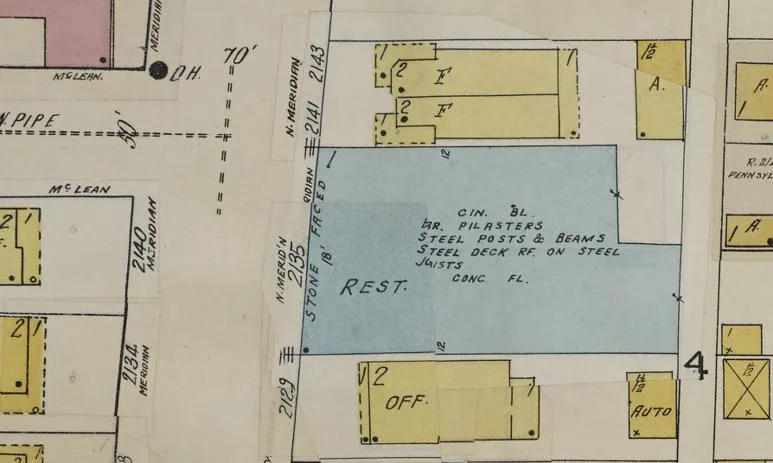
Building at 2133 N. Meridian Street, Sanborn Fire Insurance Map, Indianapolis, Indiana Vol. 4, 1915, Revised 1950 (Map clipping from Library of Congress)
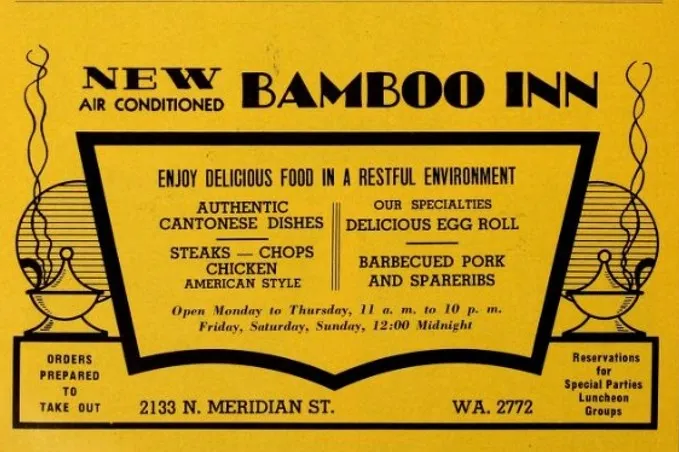
Advertisement for the New Bamboo Inn (Clipping from 1952 Polk’s Indianapolis City Directory)
However, the legacy of the restaurant continued spread in the city. It was no doubt that those who could claim statuses as “former cook of the Bamboo Inn” and “formerly associated with the Bamboo Inn” gained a reputation for preparing high quality Chinese food among Hoosiers. Mandarin Inn, Lantern Room, Chinese Palace, and House of Cheung, were just some of those whose founders were either the former owner or the former employee of Bamboo Inn. Though some of these restaurants were closed because the owners decided to retire, some of them passed through multiple generations. Many of these restaurants were the places where Hoosiers were introduced to Chinese food and held a significant place in their memories.
Its influence even stretched across the state. For instance, in 1937, the former Chinese cook of the Bamboo Inn, Lee Hong, started his work as chief chef in a newly opened Chinese Restaurant called New China Café in Lafayette, Indiana. In 1958, William Chung, who was formerly associated with others in the operation of the Bamboo Inn, moved to Franklin, Indiana and started a new Chinese restaurant there.
Bamboo Inn was a witness to the formation of the Chinese community and contributed to the growth of Chinese restaurants in Indianapolis and other Indiana cities throughout the twentieth century. More than just a place to eat, it served as a vital anchor for early Asian American enterprise in the state. It also stood as a beacon of cultural exchange on Indiana’s most prominent stage, Monument Circle. By blending Eastern heritage with the bustling energy of a growing Midwestern capital, the Bamboo Inn helped weave the Chinese American experience into the cultural fabric of Indiana.
The English Hotel and N. Meridian Street buildings that housed the Bamboo Inn are no longer extant. However, the Circle Theater (now Hilbert Circle Theatre) (NR-0363) remains active today and was individually listed in the National Register of Historic Places in 1980. The theater is also located in the Washington Street - Monument Circle Historic District (NR-1339), which was listed in the National Register of Historic Places in 1997. For more information about the Circle Theater, visit the State Historic Architectural and Archaeological Research Database (SHAARD) at on.IN.gov/SHAARD.
Special thanks to Mr. Peter Cheung for taking the time to be interviewed and share his stories about the Bamboo Inn.