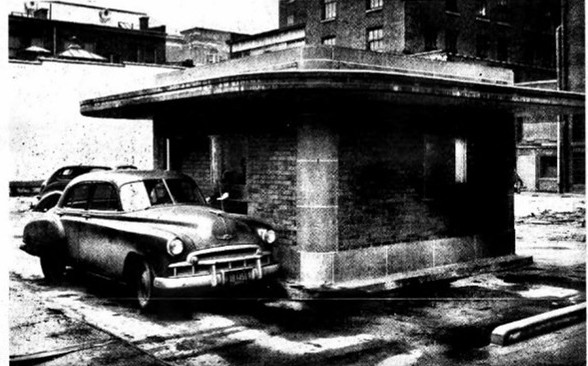
While living in a car-centric city, it’s easy to forget how many everyday errands we now complete without ever opening our car door. From fast food and coffee to pharmacy pickups and ATM deposits, the drive-through feels like second nature. Banks were among the first places to shape this habit, but have you ever wondered how drive-in banking first began? This article explores the introduction and development of this feature in Indiana.
During the early 20th century, the American automobile industry saw remarkable growth, and the car gradually shaped the pattern of everyday life in the United States. In 1929 alone, over 5 million automobiles were produced. “Drive-in” facilities allowed people to conduct business and social functions without leaving their vehicle. Banks built purpose-built windows, lanes, and canopies so customers could bank from the driver’s seat.
There is no firm evidence pinpointing the very first institution to create a drive-through service at a bank. Some historians credit George Dahl, a prominent Dallas architect, with an example at Hillcrest State Bank featuring a drive-through bank teller constructed in the 1920s. The magazine Popular Mechanics’ 1930 issue reported on a drive-up window installed at the Grand National Bank in St. Louis, Missouri. Meanwhile, the American Bankers Association notes City Center Bank of Kansas City, Missouri as among the earliest to offer drive-through banking services in 1931. Chicago banker George Sax has also sometimes been credited with popularizing the idea.
In Indiana, the Bankers Trust Company was among the first to embrace this new technology. In 1930, it introduced a new service for motorists called the Automobile Depositary at its Pennsylvania Street (at Ohio Street) location in Indianapolis, making it possible for customers to make deposits from their cars. Featured in the Indianapolis Star, the new automobile service window was advertised as a way to save customer time and help them avoid the risk of receiving parking tickets. It featured bullet-proof glass, a protected speaking aperture, and a service tray.
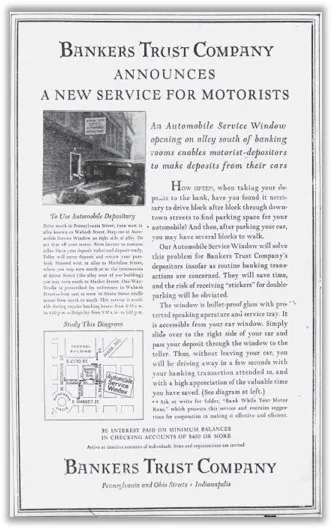
(Newspaper clipping from The Indianapolis Star, April 1, 1930)
The vice president of Bankers Trust Company, Eugene W. Short, claimed that his institution was the first in Indianapolis to install a deposit window. Subsequently, other banks throughout the state began to provide a similar service. In 1937, The Burroughs Clearing House published an article regarding the nationwide spread of the auto deposit window, highlighting examples in Indianapolis. The reporter wrote how he could visualize adaptations of the Indianapolis system, which was developed by several Indianapolis banks, in various communities from Boston to San Francisco.
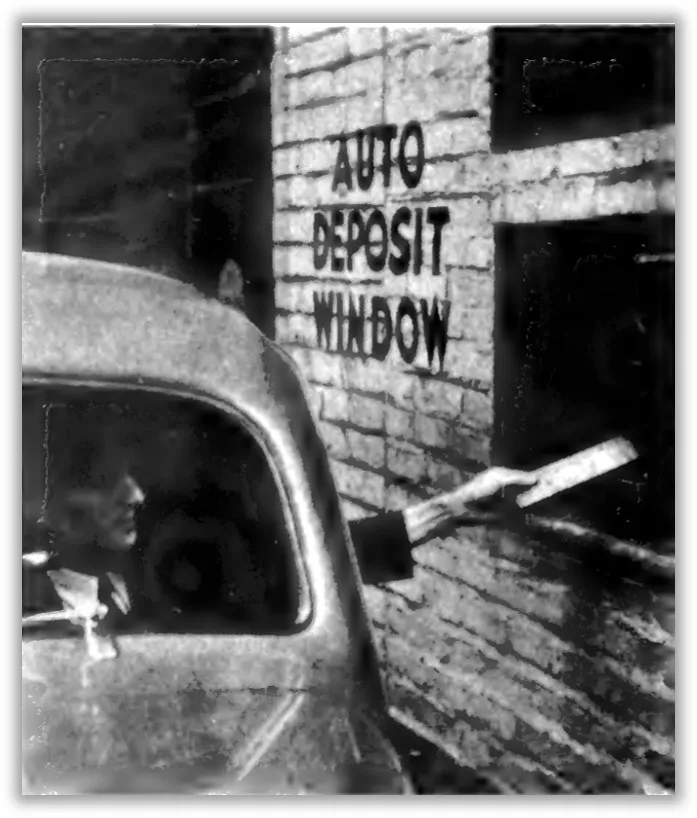
Auto deposit window of the Peoples State Bank (Photo from John Farnham, “Speeding Deposits,” The Burroughs Clearing House, December 1937)
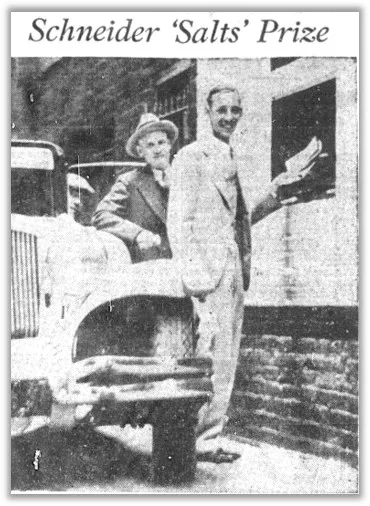
In 1931, Speedway winner Louis Schneider deposited his winnings at the new automobile teller window of the Peoples State Bank. (Newspaper clipping from Indianapolis Times, June 2, 1931)
Four banks in Indianapolis demonstrated the same method of installing a teller’s window on a side wall facing an alley early on: the Bankers Trust Company, the Fidelity Trust Company, the Security Trust Company, and the Peoples State Bank. The window design was notably simple in construction. Banks did not require an extra clerk to service the window. Clerks could conduct their work in the branch and keep an eye on the window. Taken together, these alley‑wall windows position Indianapolis among the early adopters of drive‑up banking in the state.
Between 1950 and 1980, as the American population grew by 50 percent, the number of automobiles increased by 200 percent. In the 1950s, with post-war automobile production, banks began constructing new structures with dedicated drive-in windows, often branded as “drive-in banks”. Additionally, The Tribune in Seymour noted that in 1953, the biggest trend in the banking business was the drive-in bank.
In Indianapolis, Fidelity Trust Company opened a branch, designed by prominent architect Edward D. Pierre and branded as “the First Drive-In Bank in Indianapolis” in 1949 at 1440 North Meridian Street. Advertisements promoted it as Indianapolis’ “newest, most streamlined, most modern” bank.
In 1952, Peoples State Bank introduced what it also called the city’s first drive-in bank located at 130 E. Market Street and listed it in the Indianapolis City Directory as the only downtown banking convenience. It was a separate building set behind the main bank building with three windows for customers.
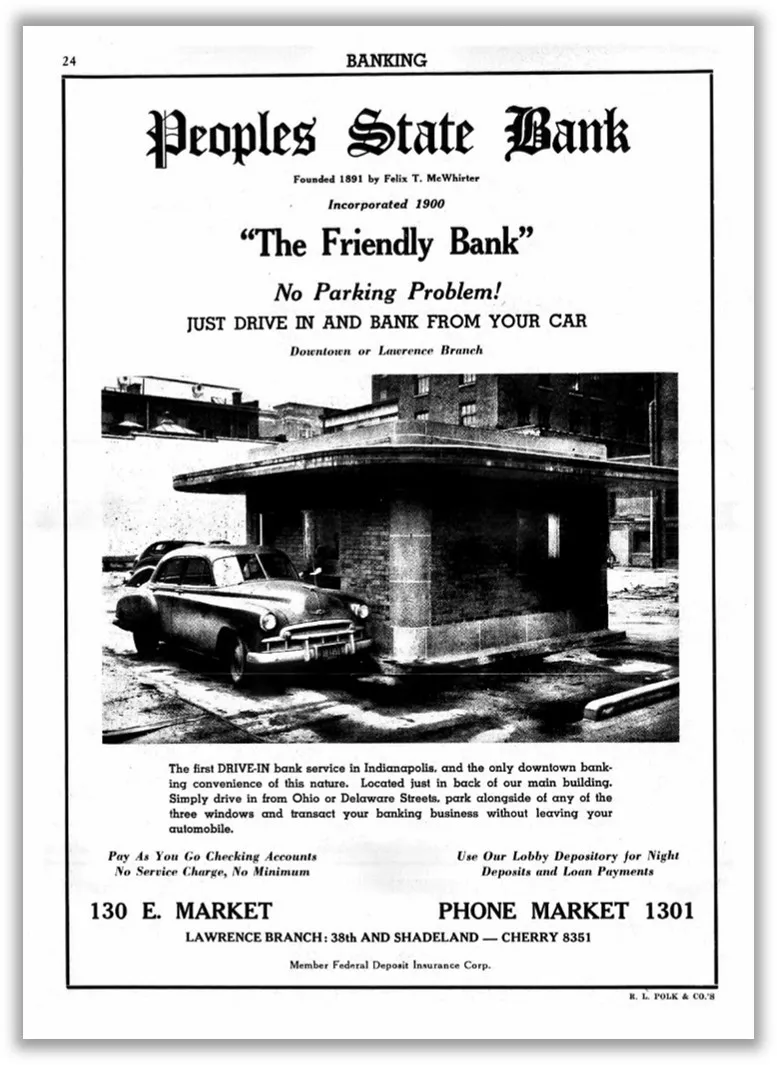
Drive-In Bank of Peoples State Bank in Indianapolis at 130 E. Market Street (clipping from 1952 Indianapolis City Directory)
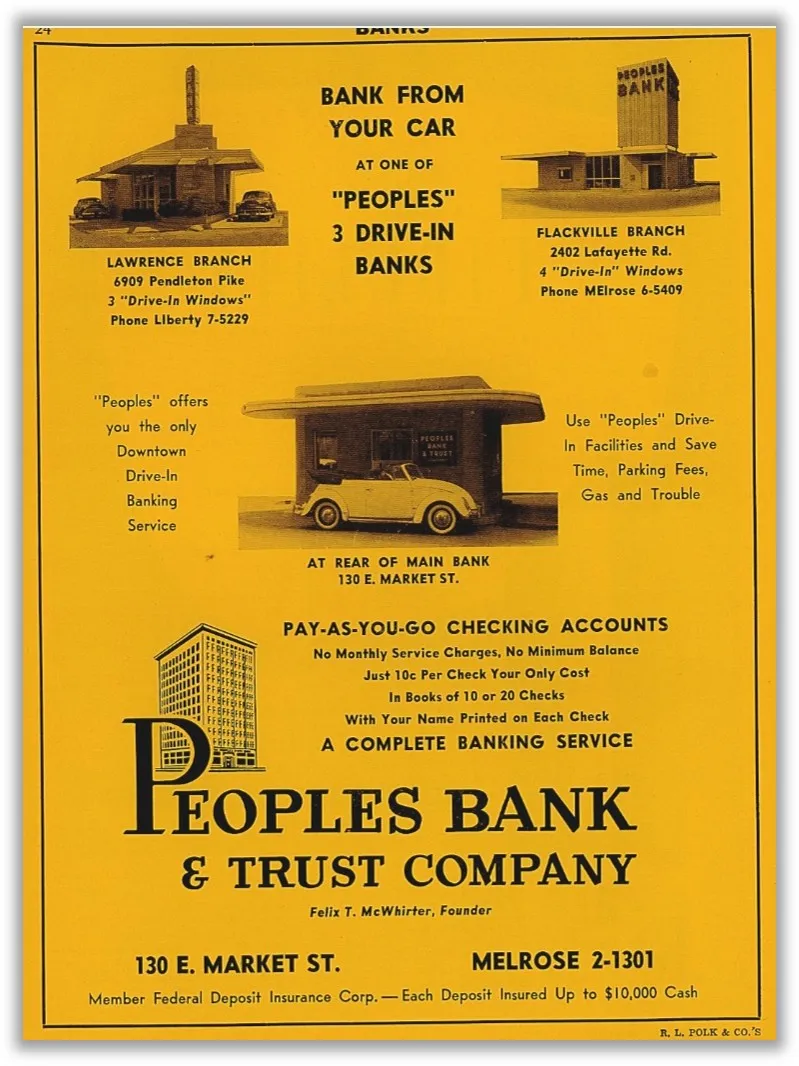
Drive-In Banks of Peoples State Bank in Indianapolis at 130 E. Market Street, 6909 Pendleton Pike, and 2402 Lafayette Road. (Clipping from 1957 Indianapolis City Directory)
Across Indiana, other smaller banking companies soon introduced their first drive-in branch as well, including First National Bank in Kokomo (1135 South Main Street), Farmers State Bank in Valparaiso (1952 at Franklin Street and Lincolnway), Anderson Banking Company in Anderson (1954 at Meridian & 10th Streets), Terre Haute First National Bank in Terre Haute (1954 at 300 South 25th Street), Old National Bank in Evansville (1956 at 2121 West Franklin Street), and National Bank & Trust Company in South Bend (1961at 1847 Lincoln Way East).
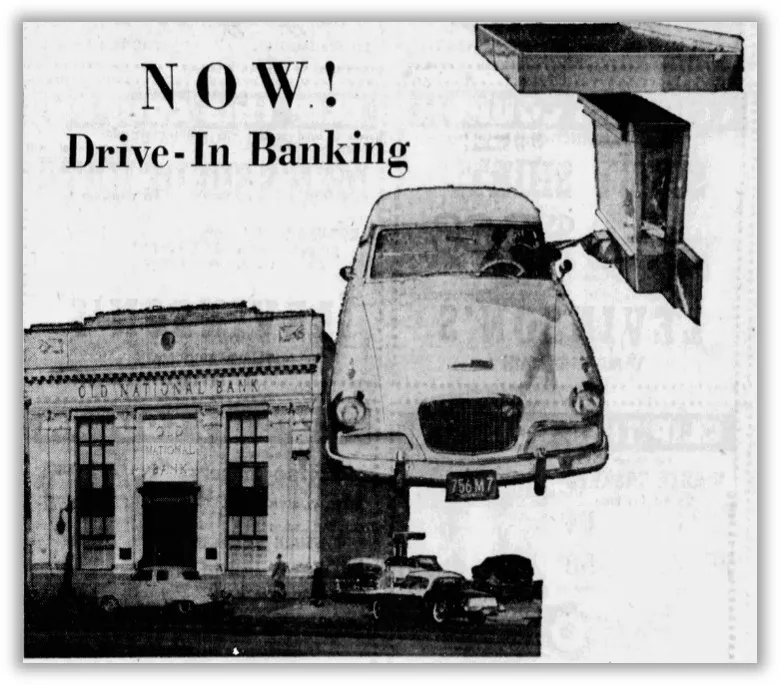
Drive-In banking service of Old National Bank of Evansville (Newspaper clipping Evansville Courier and Press, January 15, 1956)
In 1954, Eero Saarinen designed the Irwin Union Bank Building at 500 Washington Street in Columbus. Two drive-through bank windows were placed along the alley facing west. The new home for Irwin Union Bank and Trust Company opened in March 1955. Ten years later, new parking and drive-in banking areas were constructed as expansions to the property, covering approximately 4,500 square feet in a half-block area on Jackson Street between Fifth and Sixth Streets. Eero Saarinen and Associates designed the new bank facilities with a garden area to the west of the drive-in windows. The new drive-through area was built with concrete aggregate and bordered by buff-brick edgers.
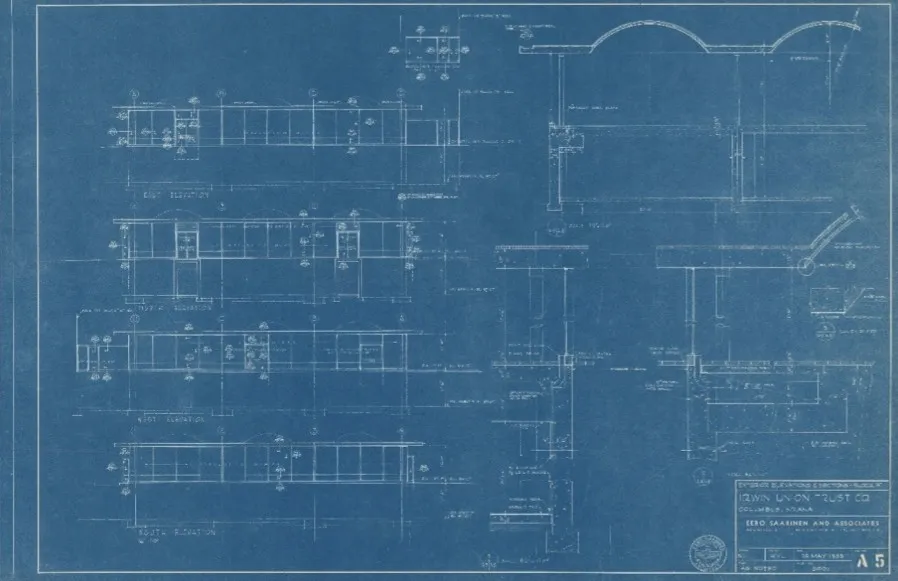
Architectural drawing for drive-in teller windows of Irwin Union Bank Building at 500 Washington Street, Columbus. Credit: Irwin Union Bank (central office) architectural drawings, Eero Saarinen & Associates, 06/30/1954, CIAA Legacy Collection (C0006), Columbus Indiana Architectural Archives, BCPL Archives, Bartholomew County Public Library, Columbus, IN
Famed landscape architect Dan Kiley blended the new drive-in facility into a park-like urban plaza by creating a gridded bosque of three rows of small-leaved linden (Tilia cordata) intentionally arranged to provide shade to drivers waiting in line at the bank. Additionally, stainless steel and anodized aluminum bollards served as lighting fixtures in the drive-through area. Each drive-in booth contained its own separate heating and air conditioning units and connected to the main office by means of a seven-foot-high underground passage. Drive-in traffic at the four booths was regulated by an electric “teller on duty” sign controlled by each teller.
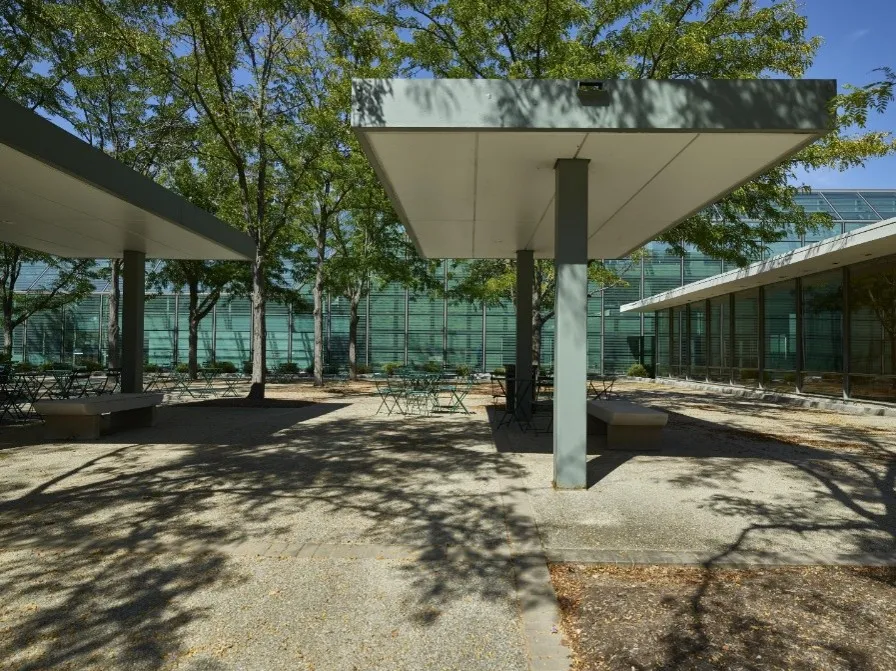
Irwin Union Bank, Columbus Indiana, photo by Carol M. Highsmith, from Library of Congress Prints and Photographs Division
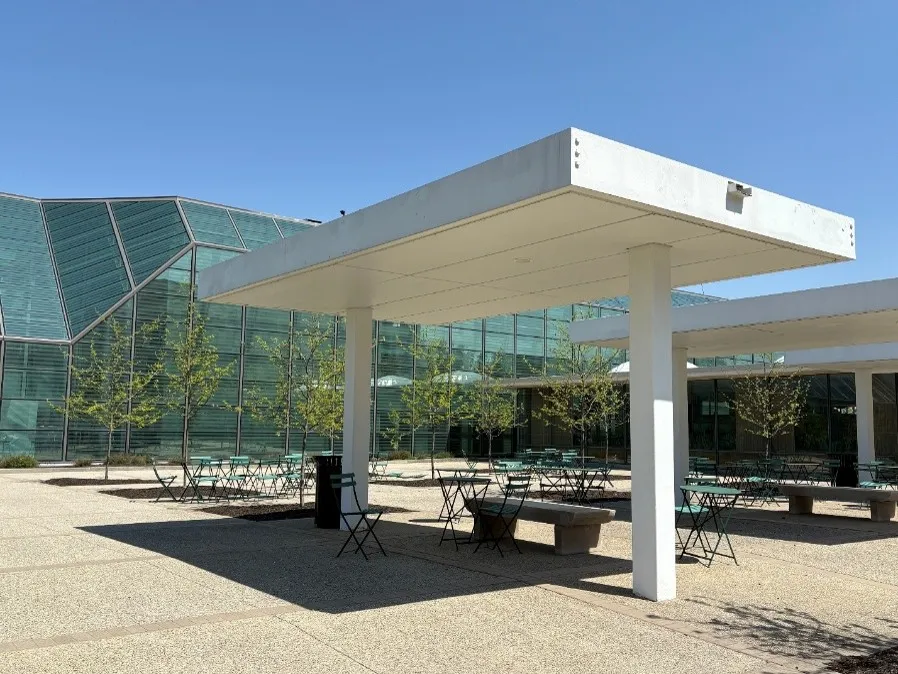
Irwin Union Bank and Trust Company at 500 Washington Street; Credit: Kami Cai.
Also in Columbus, the Eastbrook Plaza Branch of Irwin Union Bank and Trust was designed by noted American architect Harry Weese in 1961. As mentioned previously, incorporating a drive‑through facility or window in bank buildings was not novel in the 1950s. However, the automobile access of the Eastbrook Plaza Branch stood out with its four distinctive towers with drive-up windows near each corner of the building and a perimeter drive which encircled the building for easy access. The unique design of the drive-up windows placed the teller at eye level with the drive-up customer. Interestingly, these towers earned the nickname the “Dead Horse Bank,” drawing comparisons with a horse on its back, feet in the air. By 1966, all five locations of the Irwin Union Bank and Trust Company featured drive-in facilities.
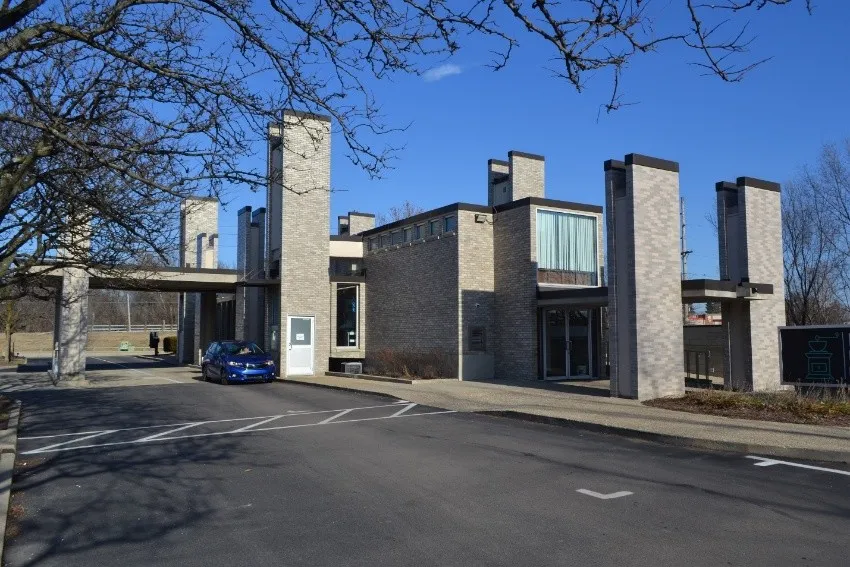
Irwin Union Bank Eastbrook Plaza Branch, Credit: Indiana State Historic Architectural and Archaeological Research Database (SHAARD)
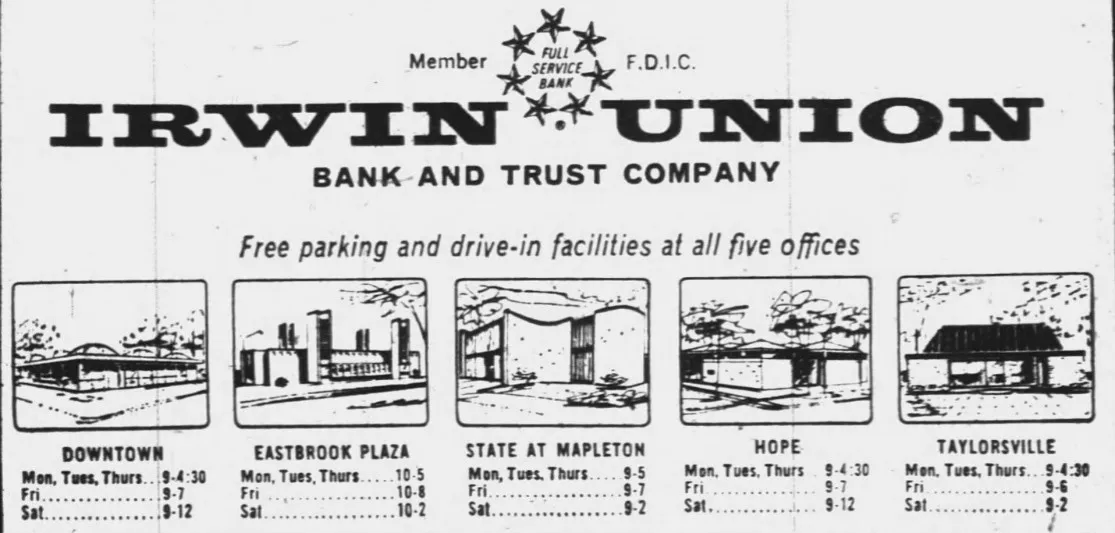
Five branches of Irwin Union Bank and Trust Company in Columbus. Credit: The Republic, June 1, 1966.
In approximately 1970, Peoples Trust Bank of Fort Wayne hired George Nelson and Gordon Chadwick from New York to design a prototype for a series of suburban banks in Fort Wayne, readily identifiable as part of a local banking system. With that design purpose, a pyramidal form was chosen because the shape suggests stability and is a reasonable structural form. With that form, the design limited views in all directions. Windows were kept to a minimum and placed at eye level in a 1-ft band between the perimeter wall and the space frame structure of the roof. A side wall was cut to the level of the teller’s desk and served as the drive-through window. By the end of 1971, three ‘Pyramid’ branches were constructed in Fort Wayne. The design was awarded an Outstanding Aesthetic Design of Structural Steel from the American Institute of Steel Construction in 1972. Altogether, five ‘Pyramid’ branches were built in Fort Wayne: 3101 North Anthony Boulevard, 926 West State Boulevard, 3308 Fairfield Avenue, 215 East Tillman Road, and 5767 Saint Joe Road which was demolished c. 2008.
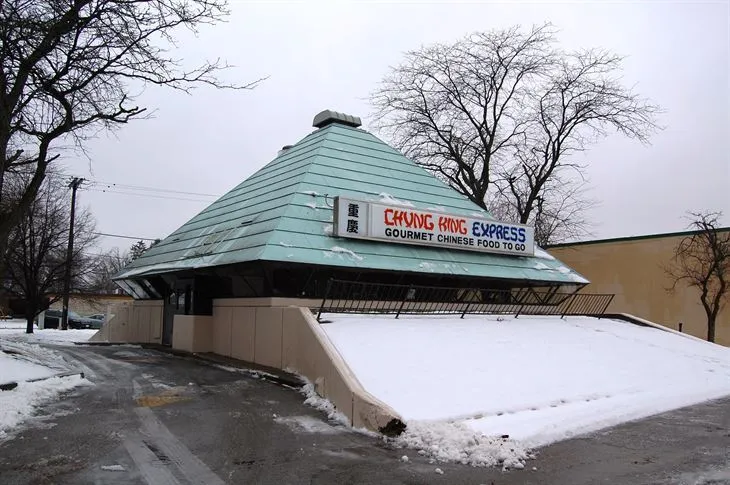
Pyramid Branch of Peoples Trust Bank in Fort Wayne at 3101 N Anthony Boulevard. Credit: SHAARD
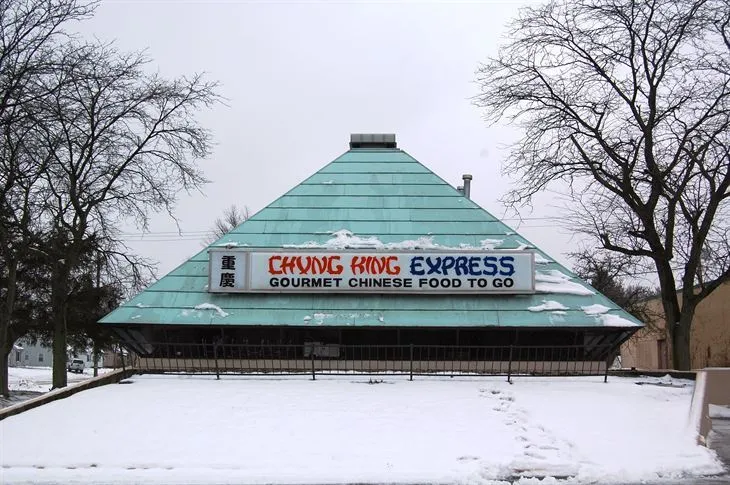
Pyramid Branch of Peoples Trust Bank in Fort Wayne at 3101 N Anthony Boulevard. Credit: SHAARD
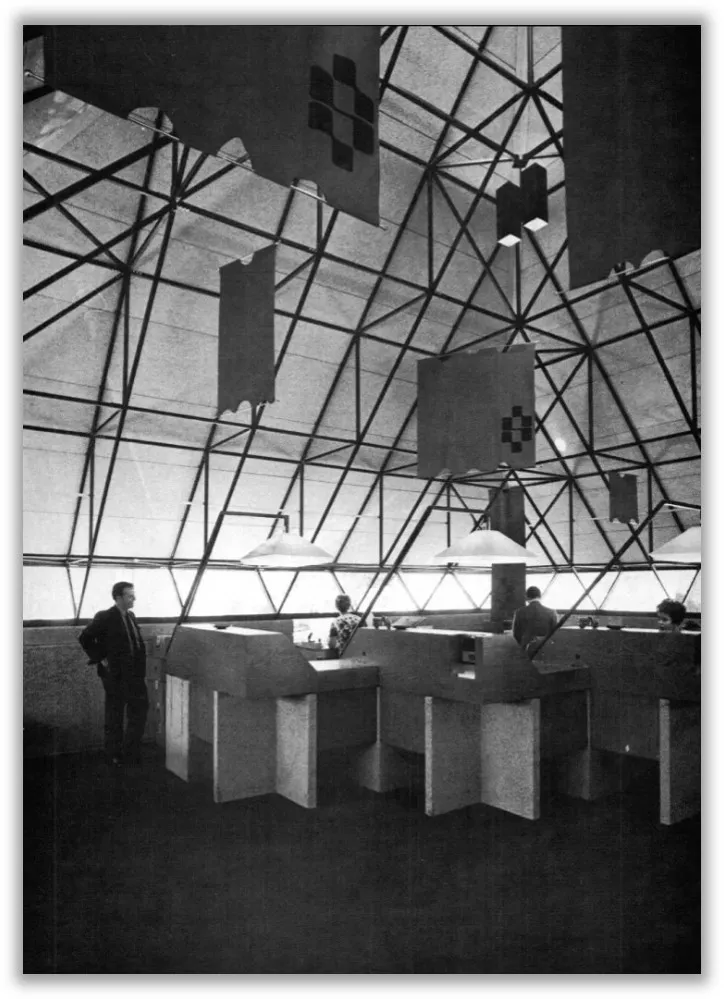
Interior of the Pyramid Branch of Peoples Trust Bank in Fort Wayne. Credit: “Dollars and Sense Buy Design,” Progressive Architecture, November 1971.
When Terre Haute’s First National Bank advertised its first drive-in bank in 1954, it listed six advantages of the new drive-in facility: no parking problems, no standing in line, no need to be “dressed up,” no wasting needed time, no fighting congested traffic, and no battling bad weather. Another similar advertisement for the bank portrayed the drive-in as a time‑saving service particularly aimed at women, promising “no downtown traffic,” covered windows for rainy days, and the convenience of banking with children in the car.
A 1965 Anderson Sunday Herald advertisement of Citizens Banking Company depicted a scene: a busy housewife and mother finding it necessary to do a certain amount of banking once or twice every week. Jeanne, having to budget her time as well as her money, learned long ago that banking from her car at the Citizens Drive-Up Bank, nearest to her home, not only saves valuable time but eliminates nasty parking problems. Tom Sacilowski, general manager of the Citizens “West-Side” Drive-In Bank, transacts the necessary bank service for Jeanne before she starts on her “Spring Shopping Tour.”
The advent of drive-in banks gave Hoosiers new options for everyday banking, especially on busy streets and in bad weather. Currently, drive-through service lanes are common at many branches, and tellers work alongside interactive teller machines and ATMs. Even though many early drive-thru banking facilities have been demolished, some are still functioning in their original use. Others have found a new life: The Eastbrook Plaza Branch of Irwin Union Bank and Trust in Columbus is reborn as a coffee shop; one of the Pyramid branches of Peoples Trust Bank in Fort Wayne now houses a local favorite Chinese restaurant; and the Irwin Union Bank Building’s drive-in facility in downtown Columbus now serves as canopies with seating areas for visitors. Drive‑throughs are a significant part of American culture, products of the twentieth-century motor age that still shape how we move, shop, and bank. From alley‑wall windows in the 1930s to Modernist branches with shaded drive‑throughs, Indiana’s banks helped make “banking from the driver’s seat” an everyday convenience. These buildings tell a bigger story, too: how design, technology, and car culture reshaped our towns, often in ways we still rely on today.
References
American Bankers Association. “1925-1949: A History of America’s Banks and the ABA,” n.d. https://www.aba.com/about-us/our-story/aba-history/1925-1949.
Anderson, Jon. “History Revealed as Demolition Begins on Dahl-Designed University Park Chase Bank - CandysDirt.com.” CandysDirt.com, July 20, 2017. https://candysdirt.com/2017/07/20/history-revealed-demolition-begins-dahl-designed-university-park-chase-bank/.
“Architectural Award of Excellence.” American Institute of Steel Construction, 1972.
Farnham, John. “Speeding Deposits.” The Burroughs Clearing House, December 1937.
Federal Trade Commission. “Report on Motor Vehicle Industry.” Washington, D.C.: United States Government Printing Office, 1939.
Horatio Alger Association of Distinguished Americans. Inc. “George D. Sax* - Horatio Alger,” February 6, 2026. https://horatioalger.org/members/detail/george-d-sax/.
Indiana Landmarks. “Modernist Bank Finds New Use as Coffee Shop - Indiana Landmarks.” Indiana Landmarks, March 7, 2023. https://www.indianalandmarks.org/2023/03/modernist-bank-finds-new-use-as-coffee-shop/.
Jackson, Kenneth. “The Drive-in Culture of Contemporary America.” In The City Reader, edited by Richard T. LeGates and Frederic Stout. Routledge, 2015.
Popular Mechanics. “Autoists Do Banking from Their Cars.” New York, N.Y.: Hearst Corp, July 1930.
Progressive Architecture. “Dollars and Sense Buy Design.” November 1971.
Rae, John Bell. The Road and the Car in American Life. Cambridge, Mass. : MIT Press, 1971.