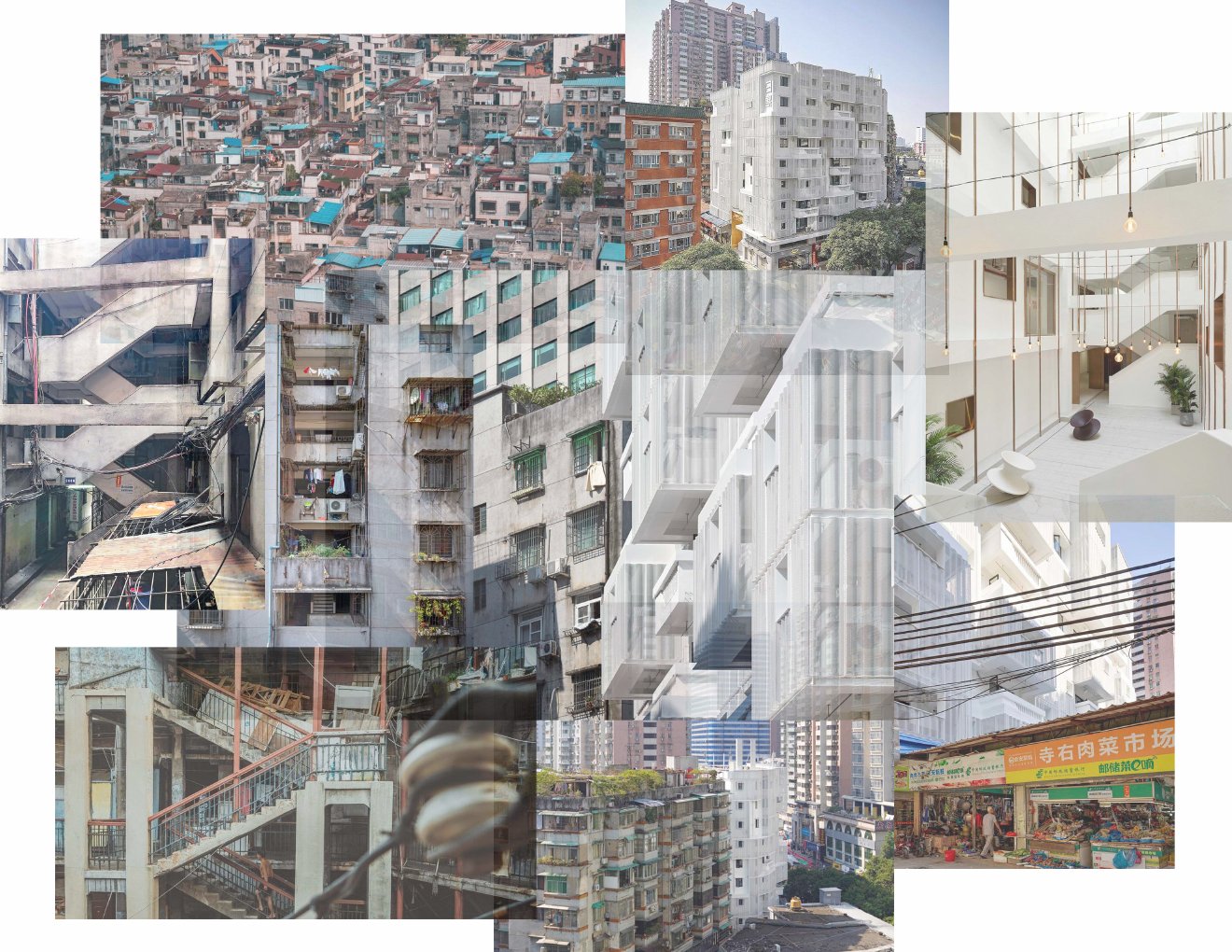
One Building in the Urban Village
Peripheral Urbanization and Capital Intervention in Guangzhou
Guangzhou emerges as a unique first-tier city, distinguished by the significant presence of urban villages within its central confines. As of 2016, according to incomplete statistical data, there are 304 urban villages, varying in size, sprawled across Guangzhou’s landscape. These urban villages, whether nestled at the city’s periphery or ensconced within its bustling heart, operated largely devoid of centralized urban planning and regulatory oversight. Their defining features included high population densities, rampant development, and a notable absence of fundamental infrastructure.
In Caldeira’s research, she astutely underscores that irregularity and illegality often serve as the primary avenues through which economically disadvantaged individuals secure their place within burgeoning cities. Frequently, these marginalized populations find themselves compelled to embrace irregular or illicit methods of urbanization, driven by the prohibitive costs of formal housing and the inadequacy of public housing provisions (Caldeira, 2017). In Guangzhou, it is within these very urban villages that economically disadvantaged citizens carve out their urban existence.
Caldeira also posits that as peripheries improve, they may become less accessible to the poorest residents. Consequently, peripheral urbanization becomes a process that continually relocates to areas with more affordable, albeit precarious, land. It’s worth noting that her argument, while somewhat aligned with the current challenges faced by urban villages in Guangzhou, differs significantly due to the unique historical context in which these urban villages emerged. In Guangzhou’s case, indigenous villagers own the land, and those seeking a foothold in the city find affordable housing options in the form of illegal constructions built by indigenous villagers seeking to maximize their income. Since the inception of the first urban village transformation project in 2009, countless indigenous villagers have become millionaires through compensation for their properties. However, for those renting in urban villages, they are forced to seek out the next affordable enclave as a place to settle.
One such urban village in Guangzhou, situated in close proximity to the Central Business District (CBD), is the backdrop for the Vanke PORT project. This particular enclave grapples with a continual influx of laborers from outlying regions. The majority of residential structures in this locale languish in a state of disrepair, demanding immediate enhancements to the living environment. Owing to prevalent practices of “autoconstruction” and “incremental building” within urban villages, the landscape is marred by precarious structures, an intricate network of haphazardly arranged wires, air-conditioning units, and a profusion of chimneys, rendering the urban setting labyrinthine and intricate.
Enter the Vanke PORT project, led by a private sector developer, Vanke. The project’s most formidable challenge stems from the dire infrastructure conditions that plague such peripheral spaces. Restricted by limited access to essential infrastructure and services, the project’s pipeline configuration assumes a chaotic demeanor. What is particularly intriguing about this remodeling endeavor is the painstaking efforts invested by the developer in negotiating the intricate pipeline network within the village and its connection to the existing municipal infrastructure. As a result of these endeavors, the hitherto illegal infrastructure elements undergo a process of legalization during the course of the remodeling project.
In contrast to residents who may either rely on the possibility of legalization and regularization in the periphery or undertake personal initiatives to improve their living conditions (Caldeira, 2017), this project is spearheaded and funded by the private sector. While many may view this project as a potential starting point for gentrification, the developer has endeavored to keep project costs as low as possible, primarily focusing on enhancing one building within the urban village and improving residents’ quality of life.
From my perspective, I firmly believe that the Vanke PORT project can indeed serve as a significant precedent for capital intervention. It diverges from the typical large state-led initiatives that designate peripheral areas as ‘urban transformation zones,’ often resulting in their clearance for conversion into high-end and high-profit ventures—a practice quite common in Guangzhou. Instead, this project takes a different approach by concentrating on the transformation of a single building within the urban village, with a primary focus on benefiting the residents and fostering community enhancement.
However, it’s essential to acknowledge that the situation of urban villages in Guangzhou is incredibly intricate. These enclaves typically function as temporary settlements for individuals pursuing their dreams in the big city. Often, once they’ve achieved a certain level of financial stability or “earned their first pot of gold,” they move on, leaving the urban village behind.
What will the urban village mean to these individuals when it undergoes improvement? Will they plan to stay in the urban village for an extended period, no longer perceiving it as merely a temporary stop on their journey to success?
I believe the answers to these questions are multifaceted.
References
Caldeira, Teresa PR. “Peripheral Urbanization: Autoconstruction, Transversal Logics, and Politics in Cities of the Global South.” Environment and Planning D: Society and Space 35, no. 1 (February 1, 2017): 3–20. https://doi.org/10.1177/0263775816658479.